The bathroom is the room where most blind buying decisions go wrong. People choose a blind they like the look of, install it without checking whether the fabric is suitable for humid conditions, and find it delaminating or developing mould within a year. Bathrooms require specific specifications, and those specifications are not always made obvious at the point of purchase.
Why Standard Blinds Fail in Bathrooms
Most roller blind fabrics use a polyester or woven base with a coating applied to the reverse for light control. In a bathroom with regular steam from showers and baths, that coating – if not waterproof – will begin to separate from the fabric base. This delamination typically starts at the bottom hem where steam and condensation collect first. Once started, it progresses steadily upward. The result is a blind that looks increasingly shabby and eventually fails entirely.
The timeframe varies with bathroom ventilation. In a well-ventilated bathroom with an extractor fan used consistently, a non-waterproof blind might last two or three years. In a bathroom without effective extraction, that figure can be under a year.
What to Look for: PVC-Coated and Waterproof Fabrics
The solution is a fabric specified for wet-room use: PVC-coated, waterproof-rated or moisture-resistant to a standard that accounts for direct steam rather than just ambient humidity. These fabrics have a different feel to standard roller blind material – slightly stiffer and with a surface that can be wiped clean rather than absorbing moisture.
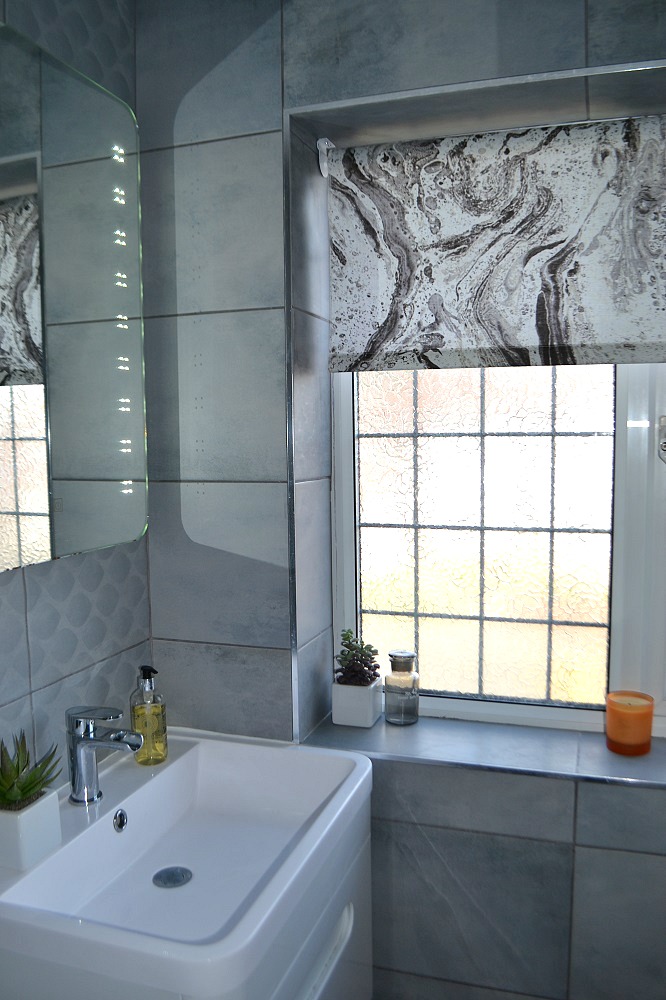
A roller blind for bathrooms in a waterproof fabric does not need to look clinical or utilitarian. The surface takes print well, and the range of colours and patterns available in bathroom-suitable fabrics is broad enough to suit most interior schemes. The practical and aesthetic compromise required is smaller than most people expect.
Privacy vs Natural Light
Bathroom windows present a particular balance to strike. Most are frosted or obscure-glazed, which provides baseline privacy; a blind is then needed for complete privacy when the light is on at night and the frosted glass becomes visible from outside. In this context, a light-filtering waterproof blind that admits natural light during the day while providing complete privacy when closed is usually the right specification.
Full blackout is rarely necessary in a bathroom unless it doubles as a changing room or the window faces a particularly close neighbour. For most bathrooms, a good-quality dimout or day-privacy fabric in a waterproof construction is the practical optimum.
Fitting Considerations
Bathrooms often have tiling around and above the window, which limits where brackets can be fixed. Drilling into tiles carries a risk of cracking – worth drilling slowly with a tile bit and appropriate plugs rather than rushing. If the window has a uPVC frame, a recess fit inside the frame avoids the tiles entirely and gives the cleanest result.
For small bathroom windows with standard uPVC frames, a clip-in or tension-mounted system removes the drilling question entirely and still provides a clean, functional result.
© Copyright 2026 Antonia, All rights Reserved. Written For: Tidylife