A joiner I once spoke to said something that stuck with me: he reckoned most garden rooms get “finished” within six weeks of the build going up, and then never touched again.
Not because people run out of money. Because they run out of ideas past the desk and the chair.
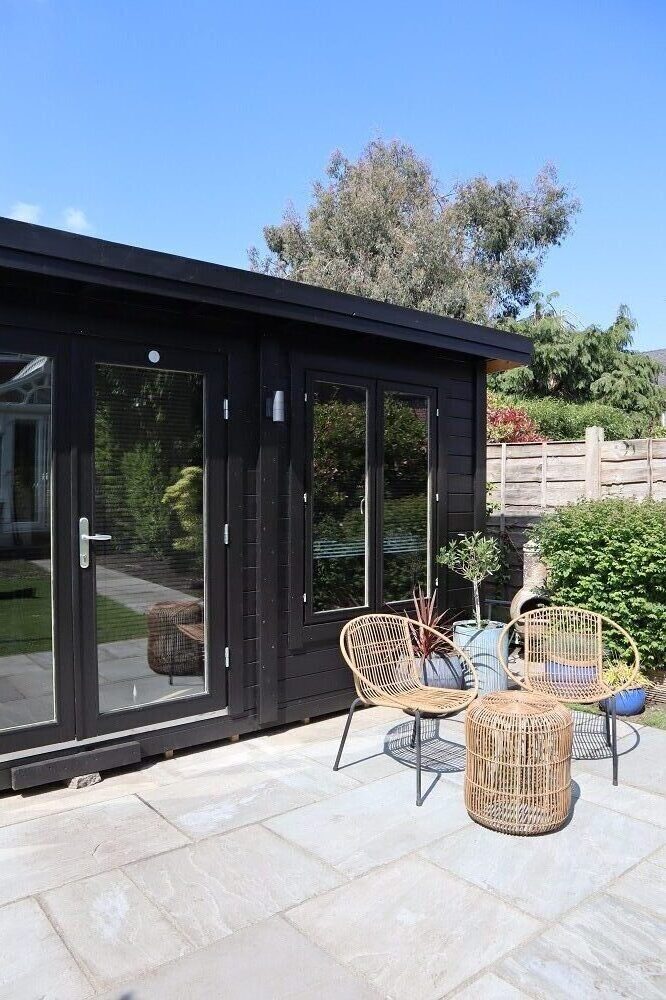
That’s the bit nobody warns you about. The building work is the easy part, weirdly. Someone else does most of it, you sign off on a design, and a few weeks later there’s a proper structure sitting at the bottom of the garden.
Then you’re standing inside an empty room with good light and no clue what to put in it, and somehow that’s harder.
Let’s be real, a garden room that’s all matching flat-pack furniture just feels like an overflow room. Nice enough, but forgettable. It doesn’t feel like anywhere you’d choose to sit for an hour with a book.
Vintage pieces and a bit of upcycling change that, not because old things are automatically better, but because they carry some evidence of having existed before you bought them. That’s oddly hard to fake with anything new.
Start With a Blank Canvas
Don’t rush this bit. Work out what the room’s actually going to be used for before you buy a single chair. A studio wants different proportions than a spot for morning coffee and a paperback.
Light changes things too. Most garden buildings have generous glazing, which is lovely until you realise a heavy, dark vintage sideboard can either look brilliant against all that brightness or completely dominate a small space.
It depends on the room, honestly, and there’s no shortcut for standing in it a few times at different points in the day before deciding.
Mix Old and New Rather Than Matching Everything
Matching furniture feels like the safe option. It’s also the boring one, and most people only realise that once the room’s finished and something feels off without them being able to say why.
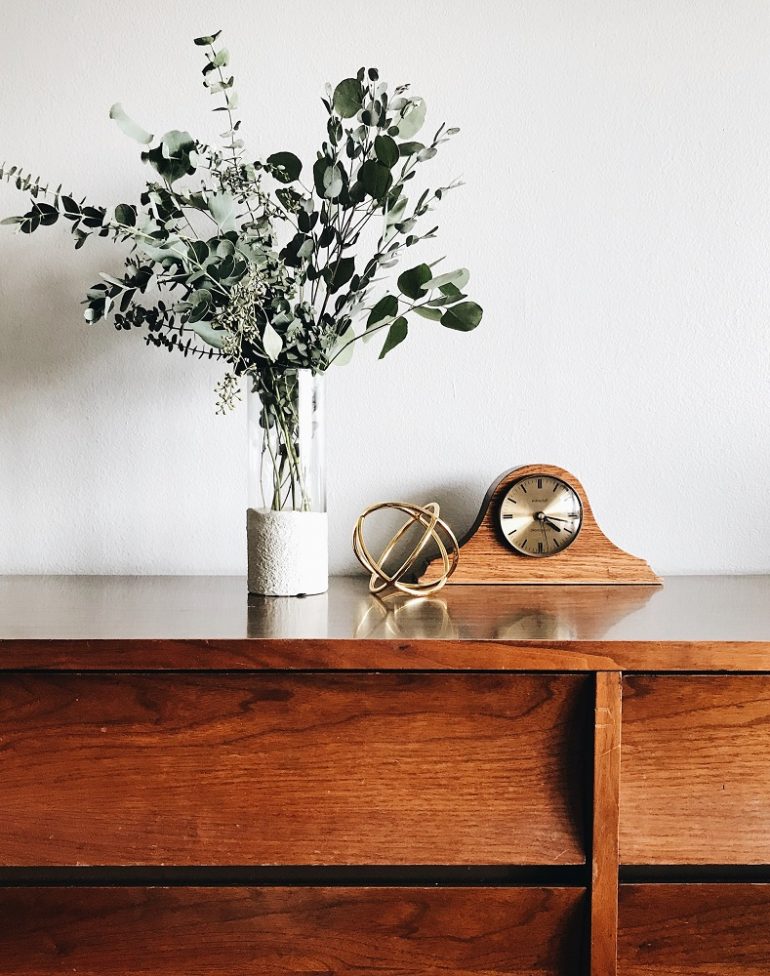
Put a scuffed vintage armchair next to a plain modern desk. Sit a mid-century sideboard under contemporary lighting. The contrast does the work.
If you’re starting from a fresh build, something from Palmako UK gives you clean timber lines that older, worn furniture actually plays off nicely, new walls and tired furniture sitting together in a way that shouldn’t work and does.
Texture matters as much as age here. Rough linen against smooth painted wood. A scratch on a table leg or a wobble in an old chair isn’t really a flaw. It’s just proof something was used before you got it.

Furniture Makeover Ideas for a Garden Retreat
You don’t need any real skill to upcycle furniture, just patience and a Saturday you’re not doing much with.
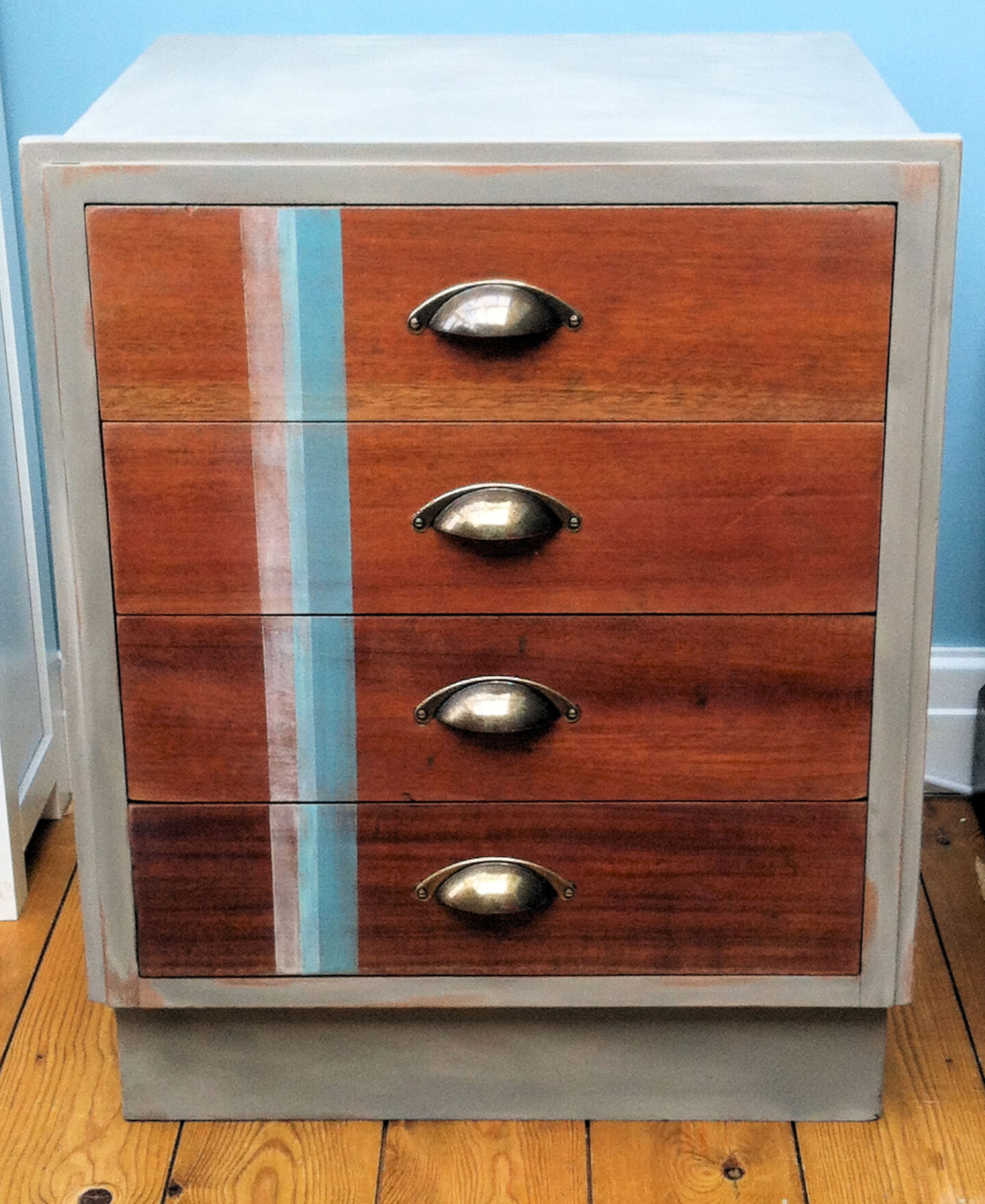
An old cabinet in a deep sage or rust colour costs the price of one tin of paint and transforms completely. Sanding a tired table back to bare wood usually looks better than anything bought new, and it’s a fraction of the price.
Reupholstering is more work, no point pretending otherwise, but even swapping the seat pad on a single chair changes how a whole corner feels.
Old trunks make decent low tables once they’re cleaned up. None of this needs to be precious. Dated furniture is often one weekend away from being exactly right.
Create Useful Storage Without Losing Character
Storage gets ignored until the room’s cluttered within a fortnight, and then everyone scrambles. Vintage cupboards handle this without feeling like a bolt-on.
Old crates stacked on their sides become open shelving for almost nothing, especially from a reclamation yard or a car boot sale if you’ve got the patience for one.
This works particularly well in modern garden rooms, where the plain architectural lines leave enough space for mismatched storage to actually stand out rather than fight for attention.
A bench with storage built underneath, or an old dresser repurposed as a desk with drawers, earns its space twice over in a smaller room.
Use Colour to Connect the Room With the Garden
Storage sorts the practical side. Colour is what actually ties the room to what’s outside the window, and it gets skipped more often than it should.
Earthy tones like ochre or clay echo whatever’s growing just beyond the glass. Bare, unpainted timber does something similar without any effort at all.
A lot of people find it easier to picture a palette by looking at how it’s already been done elsewhere. Browsing something like Palmako’s summer house collection is a decent shortcut for seeing how natural wood tones sit against soft furnishings before committing to your own choices.
Finish the Space With Second-Hand Accessories
The last details matter more than people expect, and they’re usually the cheapest part of the whole thing. A secondhand mirror bounces light into a small room in a way nothing else quite manages.
Old lamps with new shades look deliberate rather than mismatched. Charity shop artwork, a chipped ceramic bowl, a linen throw with some wear in it, these are what stop a room feeling staged for a photo.
It Doesn’t Need to Look Showroom-Perfect
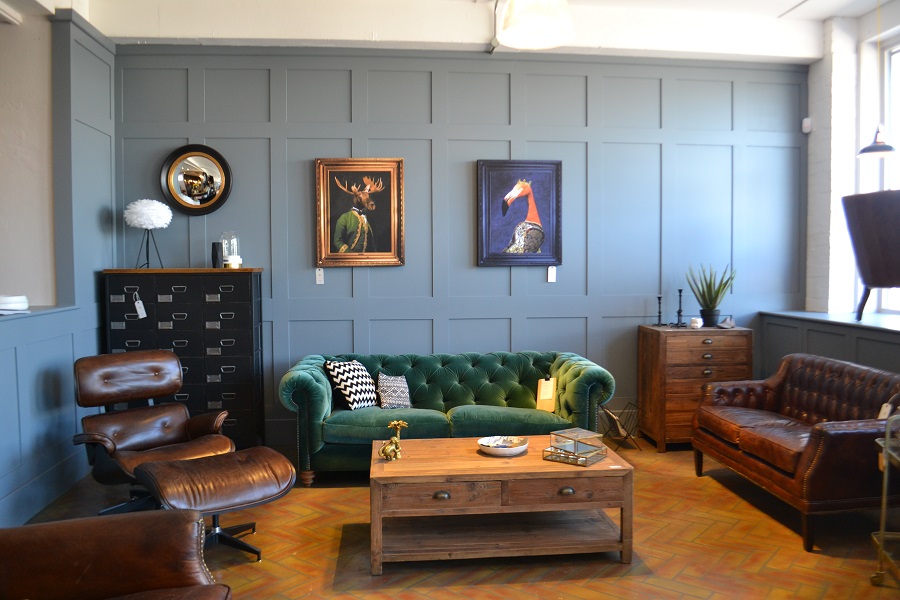
The garden rooms people actually spend time in are rarely the pristine ones. They’re the ones with a table someone’s grandmother owned, a chair that doesn’t quite match the rest, a shelf made from an old crate that took an afternoon to sand down.
Good construction gives you a solid enough base to take risks with. Vintage and upcycled furniture gives the room something to say. Put them together and it stops looking like a garden building and starts feeling like somewhere you’d actually want to sit.
© Copyright 2026 Antonia, All rights Reserved. Written For: Tidylife